Category: Education & Career Development

  • Career After Class 12 Science: Complete Career Guide for Students

    By Er. Birendra Pratap Singh

    Choosing the right career after Class 12 Science is one of the most important decisions in a student’s life. Every year, thousands of students complete their Board Examinations and face a common question:

    “What should I do after Class 12 Science?”

    The good news is that Science students have one of the widest career choices available today. Whether your interest lies in Engineering, Medical Sciences, Research, Defence, Artificial Intelligence, Space Technology, Data Science, or Teaching, a strong Science background opens countless opportunities.

    This guide will help you understand the major career options after Class 12 Science.


    Step 1: Know Your Stream

    Science students generally belong to one of these combinations:

    PCM (Physics, Chemistry, Mathematics)

    Suitable for:

    • Engineering
    • Architecture
    • Defence
    • Data Science
    • Computer Science
    • Research
    • Aviation

    PCB (Physics, Chemistry, Biology)

    Suitable for:

    • MBBS
    • BDS
    • Nursing
    • Pharmacy
    • Biotechnology
    • Physiotherapy
    • Medical Research

    PCMB

    Students with Mathematics and Biology have the flexibility to choose careers from both Engineering and Medical fields.


    Engineering Careers

    Engineering remains one of the most popular choices for PCM students.

    Major branches include:

    • Computer Science Engineering
    • Artificial Intelligence
    • Electrical Engineering
    • Electronics Engineering
    • Mechanical Engineering
    • Civil Engineering
    • Aerospace Engineering
    • Robotics Engineering
    • Biotechnology Engineering

    Entrance Examinations:

    • JEE Main
    • JEE Advanced
    • State Engineering Entrance Exams

    Medical Careers

    Students interested in healthcare can choose:

    • MBBS
    • BDS
    • BAMS
    • BHMS
    • BUMS
    • Veterinary Science
    • Nursing
    • Pharmacy
    • Physiotherapy
    • Occupational Therapy

    Entrance Examination:

    • NEET-UG

    Pure Science Careers

    Students who enjoy understanding nature and conducting research can pursue:

    • B.Sc. Physics
    • B.Sc. Chemistry
    • B.Sc. Mathematics
    • B.Sc. Electronics
    • Integrated M.Sc.
    • Research Programmes

    Future opportunities include:

    • Scientist
    • Research Fellow
    • University Professor
    • Space Research
    • Nuclear Research

    Computer and Technology Careers

    Technology is growing rapidly.

    Popular fields include:

    • Artificial Intelligence
    • Machine Learning
    • Cyber Security
    • Data Science
    • Software Development
    • Cloud Computing
    • Robotics

    Many of these careers require strong Physics and Mathematics fundamentals.


    Defence Services

    Science students can join:

    • Indian Army
    • Indian Navy
    • Indian Air Force

    Through:

    • NDA
    • Technical Entry Scheme
    • Air Force Technical Branch

    Physics develops analytical thinking, which is highly valued in defence services.


    Aviation Careers

    Interested students may become:

    • Commercial Pilot
    • Aircraft Maintenance Engineer
    • Air Traffic Controller
    • Aerospace Engineer

    These careers require excellent knowledge of Physics.


    Emerging Careers

    The future belongs to interdisciplinary fields.

    Examples:

    • Quantum Computing
    • Renewable Energy
    • Space Technology
    • Nanotechnology
    • Electric Vehicles
    • Semiconductor Technology
    • Biomedical Engineering

    These sectors are expected to create millions of jobs in the coming decades.


    Teaching and Education

    Students passionate about learning can become:

    • School Teacher
    • College Lecturer
    • Professor
    • Educational Content Creator
    • YouTube Educator
    • Online Course Creator

    Teaching remains one of the most respected professions.


    Government Opportunities

    Science graduates are eligible for numerous government examinations, including:

    • UPSC
    • SSC
    • Banking
    • ISRO
    • DRDO
    • BARC
    • Railways
    • State Public Service Commissions

    Skills More Important Than Marks

    While good marks are valuable, employers and universities also look for:

    • Communication Skills
    • Problem-Solving Ability
    • Critical Thinking
    • Digital Skills
    • Creativity
    • Teamwork
    • Leadership
    • Continuous Learning

    How to Choose the Right Career

    Ask yourself:

    • What subjects do I enjoy?
    • What type of work excites me?
    • Do I prefer research, design, medicine, technology, or teaching?
    • What are my strengths?
    • What kind of life do I want to build?

    Career selection should match both your interest and your abilities.


    Common Mistakes to Avoid

    Do not:

    • Choose a career only because of friends.
    • Follow trends blindly.
    • Ignore your own interests.
    • Decide only on the basis of salary.
    • Lose confidence after one examination.

    Remember:

    A successful career is built through continuous learning and dedication.


    Final Advice

    Class 12 is not the end of your educational journey—it is the beginning of countless possibilities. Science provides one of the strongest foundations for building a meaningful and successful career. Whatever path you choose, develop conceptual understanding, practical skills, and a lifelong learning attitude.

    Success does not depend only on choosing the right career; it depends on becoming the right person for that career.


    Career Reflection Exercise

    1. Which career interests you the most and why?
    2. Which subjects are your strengths?
    3. What skills do you need to develop for your dream career?
    4. Prepare a five-year career roadmap.
    5. Write three actions you will take this month to move towards your career goal.

    Quote of the Day

    “Choose a career not because it is popular, but because it allows your knowledge, passion, and character to create a meaningful impact on society.”

    — Er. Birendra Pratap Singh

    Internal Link
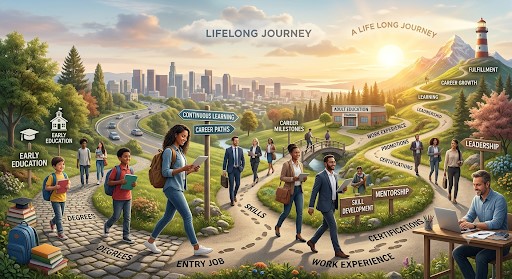
    Education and career Development: A Lifelong Journey

  • The Importance of Lifelong Learning in a Changing World

    (By Er. Birendra Pratap Singh)

    The world is changing rapidly due to advancements in science, technology, communication, and globalization. In such a dynamic environment, learning cannot be limited to school or college education alone. Lifelong learning has become essential for personal growth, professional success, and social development.

    Lifelong learning refers to the continuous pursuit of knowledge and skills throughout one’s life. It involves learning from formal education, professional experiences, books, online courses, discussions, and everyday life situations.

    One of the primary reasons for lifelong learning is the constant evolution of technology. Skills that are relevant today may become outdated in the future. Therefore, individuals must continuously update their knowledge to remain competitive and productive.

    Lifelong learning offers several benefits:

    Personal Development

    Continuous learning improves confidence, creativity, and critical thinking. It helps individuals understand new perspectives and adapt to changing circumstances.

    Career Advancement

    Professionals who continuously improve their knowledge and skills often have better career opportunities. Employers value individuals who demonstrate a willingness to learn and adapt.

    Better Decision-Making

    Learning enhances analytical abilities and helps people make informed decisions in personal and professional life.

    Social Contribution

    Educated and informed citizens contribute positively to society by promoting innovation, ethical behavior, and responsible decision-making.

    Students should develop the habit of lifelong learning from an early stage. Reading books, exploring educational resources, participating in discussions, and remaining curious about the world are effective ways to build this habit.

    Teachers also play an important role by encouraging curiosity and independent thinking rather than focusing solely on examinations.

    In today’s knowledge-based society, learning is not an option but a necessity. Those who embrace lifelong learning remain adaptable, resilient, and prepared for future challenges.

    In conclusion, lifelong learning is one of the most valuable investments an individual can make. It opens doors to new opportunities, strengthens personal capabilities, and contributes to long-term success and fulfillment.

  • Education and Career Development: A Lifelong Journey

    Education is not merely a means to obtain a degree; it is a lifelong process of acquiring knowledge, developing skills, and building character. In today’s rapidly changing world, education plays a crucial role in shaping an individual’s career and personal growth.

    Education and career Development: A Lifelong Journey

    A strong educational foundation helps students develop critical thinking, problem-solving abilities, communication skills, and self-confidence. These qualities are essential for success in any profession, whether it is engineering, medicine, teaching, research, business, or public service.

    Education and Career Development for Lifelong Growth

    It connects us throughout life. Because education builds knowledge and understanding, whereas career development helps individuals apply their skills in practical situations. Moreover, continuous learning allows people to adapt to new technologies, changing work environments, and emerging opportunities. Therefore, students should not view education only as a way to obtain qualifications, but also as a foundation for personal and professional growth.

    Career development begins with understanding one’s interests, strengths, and aspirations. However, students should explore various fields, seek guidance from teachers and mentors, and continuously upgrade their knowledge. Learning should not stop after formal education; continuous learning is the key to professional excellence.

    Technology has transformed the way we learn and work. Online resources, digital libraries, educational platforms, and professional networks provide opportunities for lifelong learning. Students and professionals who embrace new technologies and remain adaptable are better prepared for future challenges.

    Success in career development requires dedication, discipline, perseverance, and a positive attitude. Setting clear goals, maintaining a learning mindset, and developing professional ethics contribute significantly to long-term success.

    Education and career development are interconnected journeys. While education provides the foundation, continuous learning and skill development help individuals achieve their professional aspirations and contribute positively to society.

    Let us strive to learn continuously, grow professionally, and make meaningful contributions to our communities and the nation.

    — Er. Birendra Pratap Singh

    Internal Link

    Career After Class 12 Science:Complete Career Guide