Blog

  • How to Make Effective Physics Notes for Board and Competitive Exams

    Effective Physics notes can make revision faster and help students organise difficult concepts in a simple way. However, effective notes are not simply a copy of the textbook. They should help you understand, revise and apply the important ideas of a chapter.

    Physics Notes

    1. Begin With the Main Concept

    Start each topic with a short explanation of the main physical idea. Try to write it in simple language that you can understand later during revision.

    For example, before listing formulas related to electric potential, first understand what electric potential represents and how it is related to work and charge.

    2. Keep Important Formulas Together

    Create a separate formula section for every chapter. Write the formula clearly and mention the meaning of important symbols.

    For example:
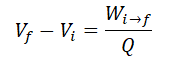
    Potential difference is work done per unit charge by external agent.

    Work done to bring a charge Q from initial position of potential to final position of potential by external agent is given by the above expression.

    Then note the physical meaning and SI unit of the quantities involved.

    This makes last-minute revision much easier.

    3. Include SI Units and Dimensions

    Units are extremely important in Physics. Write the SI unit alongside important physical quantities. For examples,
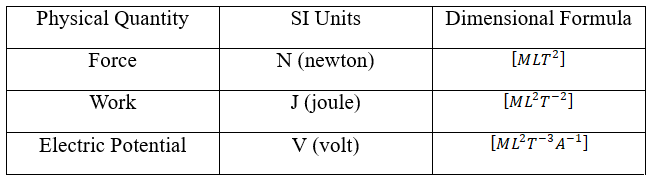
    Physical Quantities and Their SI units with Dimensional Formula

    Dimensional analysis can also be useful for checking whether an equation is dimensionally consistent.

    4. Use Diagrams and Graphs

    A good diagram can explain a Physics concept quickly. Include labelled diagrams wherever they improve understanding.

    Graphs should have clearly labelled axes and should represent the correct physical relationship.

    For example, graphs are particularly useful while studying motion, current-voltage relationships, alternating current and optical concepts.

    5. Separate Concepts From Extra Information

    For examination preparation, it is useful to distinguish between essential syllabus concepts and additional competitive-exam material.

    You may use headings such as:

    Board Examination Focus

    NEET/JEE Important

    Additional Practice

    Make Revision Time Table AND Strategies

    This helps students decide what they need to revise first.

    6. Add Common Mistakes

    A short “Common Mistakes” section can be extremely useful.

    Examples include:

    • forgetting units,
    • using the wrong sign convention,
    • confusing similar formulas,
    • ignoring vector direction,
    • making calculation errors,
    • using an equation outside its applicable conditions.

    7. Keep Notes Short but Complete

    Notes should not become another textbook. The purpose of notes is to provide a structured revision resource.

    Use headings, bullet points, formula boxes, diagrams and short explanations wherever appropriate.

    8. Revise and Update Your Notes

    Notes should be reviewed regularly. Correct errors when you discover them and update the material when the examination syllabus changes.

    A well-organised set of notes becomes increasingly valuable as examinations approach.

    Conclusion

    Effective Physics notes combine concepts, formulas, units, diagrams, graphs, examples and revision points in a structured format.

    The goal is not to write more pages. The goal is to create notes that help you understand Physics quickly and revise it efficiently.

    When your notes are clear and organised, your revision becomes more focused—and your problem-solving practice becomes more meaningful.

    Internal Link

    Physics formula revision tips

    Outbound Links

    CBSE Sample Paper 2026-27

  • How to Build Strong Physics Concepts: A Step-by-Step Learning Guide

    Physics becomes much easier when students focus on understanding concepts rather than trying to memorize formulas without knowing where or why they are used. A strong conceptual foundation helps students solve numerical problems, understand diagrams, remember formulas and apply Physics to unfamiliar situations.

    1. Start with the Basic Idea

    Before learning a formula, first understand the basic physics concepts involved. Ask simple questions: What does it represent? What is its SI unit? What factors affect it? How is it related to other physical quantities?

    For example, while studying velocity, a student should understand its meaning, direction and relation with displacement and time before immediately using equations of motion.

    2. Understand the Physical Situation

    Physics describes real physical situations through mathematical relationships. Try to imagine what is happening in the problem.

    Draw a simple diagram whenever possible. A diagram can show directions, forces, distances, angles, electric fields, magnetic fields or motion much more clearly than words alone.

    3. Learn the Formula with Meaning

    Do not treat a formula as a collection of symbols. Understand what every symbol represents and check its unit.

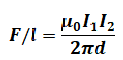
    For example, the magnetic force between two long parallel wire carrying currents is given by the formula:

    Magnetic force per unit length between two parallel current-carrying wires

    The terms used in the formula have specific physical meanings. Understanding these meanings makes the equation easier to remember and apply correctly.

    4. Connect Related Concepts

    Physics topics are interconnected. Connecting related physics concepts helps you understand how different topics are linked with one another. Motion is connected with force, force with work and energy, electricity with circuits, and magnetism with moving charges.

    When you study a new chapter, try to connect it with concepts you have already learned. These connections gradually create a strong conceptual framework.

    5. Practice Different Types of Problems

    After understanding a concept, solve problems of different levels. Begin with basic questions and gradually move towards application-based and numerical problems.

    Do not look at the solution immediately when you face difficulty. First identify what is given, what is required and which physical principle may be useful.

    6. Revise through Short Notes

    Make concise revision notes containing important formulas, definitions, units, graphs and common mistakes. Regular short revision is generally more useful than trying to learn everything immediately before an examination.

    7. Learn From Mistakes

    Mistakes are an important part of learning Physics. Maintain a small “mistake notebook” and record errors such as incorrect units, wrong signs, incorrect formula selection or calculation mistakes.

    Over time, this can help you identify repeated weaknesses.

    Conclusion

    Strong Physics concepts develop gradually through understanding, visualization, mathematical reasoning and regular practice. Instead of asking only “Which formula should I use?”, try asking “What physical principle is working here?”

    Once the concept becomes clear, formulas become easier to understand, remember and apply.

    A strong understanding of physics concepts helps students approach unfamiliar problems with greater confidence.

    Physics is not only about remembering equations—it is about understanding how nature works.


    Internal Link

    Conceptual Learning in Physics

  • Top 10 Exam-Day Strategies for Scoring High Marks in Physics

    Introduction

    The examination day is not the time to learn new concepts. It is the day to demonstrate your preparation effectively. A calm mind and a systematic approach can make a significant difference in your final score.

    Here are ten practical examination-day strategies every Physics student should follow.


    1. Reach the Examination Centre Early

    Arriving early helps you stay relaxed and mentally prepared.


    2. Carry All Required Items

    Checklist:

    • Admit Card
    • Pens
    • Pencils
    • Eraser
    • Scale
    • Calculator (if permitted)

    3. Read the Entire Question Paper

    Spend the first few minutes identifying:

    • Easy questions
    • Moderate questions
    • Difficult questions

    4. Start with Questions You Know Well

    This builds confidence and saves time.


    5. Write Clearly

    Good handwriting improves presentation and examiner readability.


    6. Highlight Important Formulae

    Underline important equations using a ruler where appropriate.


    7. Use Proper Scientific Terminology

    Avoid informal language.

    Write:

    • Electric Field
    • Potential Difference
    • Magnetic Flux

    instead of shortened forms.


    8. Draw Quality Diagrams

    Diagrams should include:

    • Labels
    • Arrow marks
    • Proper orientation

    9. Keep Track of Time

    Do not spend excessive time on one difficult numerical.

    Move ahead and return later if necessary.


    10. Review Your Answers

    Before submission:

    • Check calculations.
    • Verify units.
    • Ensure all answers are complete.
    • Confirm question numbers are correct.

    Final Words

    Board examination success depends not only on preparation but also on examination strategy.

    • Stay calm.
    • Stay confident.
    • Trust your preparation.
    • Every mark counts.

    Explore more Physics Notes, Formula Sheets, and Chapter-wise MCQs at:
    www.birendrapsingh.com

    Internal Links

    Class 12 Physics

    eBook Formula Sheets

  • How to Avoid Silly Mistakes in Physics Board Examinations

    (By Er. Birendra Pratap Singh, PGT-Physics)

    Introduction

    Physics is one of the most scoring subjects in Class 11 and Class 12 Board examinations. However, many students lose marks because of common physics board exam mistakes, even when they understand the concepts. It is also due to simple and avoidable mistakes rather than lack of knowledge. These errors can be minimized with proper preparation, regular practice, and smart examination strategies.

    This article discusses practical methods to avoid silly mistakes and improve your Physics Board examination score.

    Common Physics Board Exam Mistakes to Avoid


    1. Read the Question Carefully

    Many students answer what they think the question is asking instead of what is actually written.

    Always identify:

    • Keywords
    • Units
    • Numerical data
    • Required quantity

    Reading the question twice saves valuable marks.


    2. Write the Formula First

    Before solving any numerical problem:

    • Write the standard formula.
    • Substitute the given values.
    • Solve step by step.

    This method reduces calculation errors.


    3. Maintain Proper SI Units

    Always convert quantities into SI units before calculations.

    Examples:

    • cm → m
    • km/h → m/s
    • g → kg

    Incorrect unit conversion is one of the most common mistakes.


    4. Draw Neat Diagrams

    Physics diagrams should be:

    • Large
    • Neat
    • Properly labelled
    • Drawn with a pencil

    Good diagrams improve presentation and fetch better marks.


    5. Avoid Calculation Errors

    Double-check:

    • Decimal points
    • Square roots
    • Powers of ten
    • Scientific notation

    Use rough work wherever necessary.


    6. Manage Your Time

    Divide examination time wisely:

    • Reading paper
    • Solving numerical
    • Long answers
    • Revision

    Never spend too much time on on

    7. Leave Space for Corrections

    Avoid overwriting.

    If necessary, strike incorrect work neatly and rewrite the answer.


    8. Revise Before Submission

    • Reserve the last 10–15 minutes to:
    • Correct spelling of scientific terms
    • Verify calculations
    • Check units
    • Ensure all questions are attempted

    How to Avoid These Common Mistakes


    9. Learn Standard Derivations

    Board examinations frequently ask derivations.

    Practice writing:

    • Step by step
    • Without skipping important mathematical steps
    • With proper explanations

    10. Revise Formulae Daily

    Spend 15 minutes every day revising important Physics formulae. Formula revision significantly improves speed and confidence.


    Conclusion

    Avoiding silly mistakes is often more important than studying additional chapters. Careful reading, proper formula usage, neat presentation, and regular revision can significantly improve your Physics Board examination score.

    Remember:
    Success in Physics is a combination of knowledge, accuracy, and presentation.


    Read more Physics Notes and Formula Sheets at:
    www.birendrapsingh.com

    Internal Link

    Top 10 Exam-Day Strategies for Scoring High Marks in Physics

    Outbound Link

    CBSE Academic

  • Top 50 Physics Formula Revision Tips for Board Exams

    Introduction

    Physics is a subject that requires conceptual understanding as well as accurate application of formulas. Many students lose valuable marks because they forget formulas during examinations. A systematic revision strategy can significantly improve performance in both CBSE Board and competitive examinations.

    This article shares practical formula revision tips that every Physics student should follow.


    1. Maintain a Separate Formula Notebook

    Write all important formulas chapter-wise in a dedicated notebook.


    2. Revise Every Day

    Spend 10–15 minutes daily revising formulas instead of waiting until examinations.


    3. Learn the Meaning of Every Symbol

    Understand the physical meaning and SI unit of every symbol.


    4. Revise Dimensionally

    Remember the dimensional formula wherever applicable.


    5. Do Not Memorize Without Understanding

    Know where the formula comes from.


    6. Group Similar Formulae

    Study related equations together.

    Example:

    • Velocity
    • Acceleration
    • Momentum
    • Force

    7. Use Colour Coding

    Highlight important constants and frequently used equations.


    8. Prepare One-Page Chapter Formula Sheets

    Keep one revision sheet for every chapter.


    9. Solve Numerical Problems

    Formulas become permanent only through regular practice.


    10. Revise Before Sleeping

    A short revision before sleep improves long-term memory.


    Additional Tips

    • Revise difficult formulas more frequently.
    • Keep formula sheets near your study table.
    • Solve previous year questions.
    • Revise SI units and constants regularly.
    • Avoid learning too many new formulas one day before examination.

    Final Advice

    Consistent formula revision combined with conceptual learning is the key to success in Physics. Students who revise formulas regularly feel more confident while solving numerical problems and perform better in Board as well as NEET/JEE examinations.


    Conclusion

    Physics formulas are not merely equations; they represent physical principles. Understanding them and revising them regularly will make Physics easier, more interesting and more scoring.

    Happy Learning!

    Er. Birendra Pratap Singh
    PGT Physics

    Internal Link

    How to avoid Physics Board Exam Mistakes

  • Why Physics is the Language of Nature

    Understanding the Universe Through the Eyes of Physics

    By Er. Birendra Pratap Singh
    Physics & Engineering Educator


    Introduction

    Have you ever wondered why an apple falls towards the Earth instead of moving upward? Why does a rainbow appear after rain? How does a satellite remain in orbit? Why do mobile phones communicate instantly across continents?

    The answers to all these questions lie in one fascinating subject—Physics.

    Physics is often called “The Language of Nature” because it explains the fundamental laws that govern the universe. Just as language helps us communicate with people, Physics helps us understand the natural world.


    What Does “The Language of Nature” Mean?

    Nature constantly communicates with us.

    The movement of planets…

    The sound of thunder…

    The shining of stars…

    The flow of electricity…

    The flight of birds…

    All these are expressions of natural laws.

    Physics provides the vocabulary and grammar needed to understand these phenomena.


    Every Natural Phenomenon Follows Laws

    Nature does not work randomly.

    Every event follows scientific principles.

    For example:

    • Objects fall due to gravity.
    • Light travels at a finite speed.
    • Electric current flows because of potential difference.
    • Sound requires a material medium.
    • Energy is always conserved.

    These universal laws make Physics the language through which Nature speaks.


    Mathematics: The Alphabet of Physics

    Mathematics and Physics are inseparable.

    It provides symbols, equations, and calculations.

    Physics gives them physical meaning.

    For example:

    F = ma

    This simple equation is more than a formula.

    It describes how force changes the motion of an object and forms the foundation of mechanics.

    Thus, mathematics becomes the alphabet, while Physics becomes the language.


    Physics is Everywhere

    Many students believe Physics exists only inside textbooks.

    In reality, Physics surrounds us every moment.

    Examples include:

    • Mobile phones
    • Ceiling fans
    • Refrigerators
    • Air conditioners
    • Electric vehicles
    • GPS navigation
    • Medical imaging
    • Solar panels

    Every modern technology is built upon the principles of Physics.


    Understanding Instead of Memorizing

    One of the biggest misconceptions among students is that Physics is only about formulae.

    In reality,

    Physics is about understanding relationships.

    When you understand:

    • Why things happen,
    • How they happen,
    • Under what conditions they happen,

    formulae become easy to remember.


    Nature is the Greatest Physics Laboratory

    A student does not always need sophisticated equipment to observe Physics.

    Simply look around.

    Observe:

    • Falling rain
    • Flowing rivers
    • Flying birds
    • Moving clouds
    • Shadows
    • Rainbows
    • Mirrors
    • Magnets

    Everyday life offers countless opportunities to learn Physics.


    Physics Builds Logical Thinking

    Physics trains the mind to think scientifically.

    Students learn to:

    • Observe carefully.
    • Analyse logically.
    • Solve problems systematically.
    • Question assumptions.
    • Draw conclusions based on evidence.

    These skills remain valuable throughout life.


    Physics Connects Different Sciences

    Physics forms the foundation of many disciplines.

    Chemistry depends on Atomic Physics.

    Biology uses Biophysics.

    Engineering applies Mechanics and Electricity.

    Medicine relies on X-rays, MRI, Ultrasound, and Radiation Physics.

    Astronomy depends upon Optics and Gravitation.

    Thus, Physics connects almost every branch of science.


    Great Scientists Saw Nature Differently

    Scientists like:

    • Isaac Newton
    • Albert Einstein
    • James Clerk Maxwell
    • Michael Faraday
    • Marie Curie
    • C. V. Raman

    did not merely observe Nature.

    They asked questions that others ignored.

    Their curiosity transformed human civilization.


    Why Every Student Should Learn Physics

    Studying Physics develops:

    • Curiosity
    • Critical thinking
    • Creativity
    • Observation
    • Problem-solving
    • Scientific attitude

    Even students who do not pursue engineering or medicine benefit immensely from learning Physics.


    Physics and Everyday Decision Making

    Physics helps us make better decisions in daily life.

    Examples include:

    • Driving safely
    • Using electricity wisely
    • Conserving energy
    • Understanding weather
    • Choosing efficient appliances
    • Appreciating modern technology

    Knowledge of Physics improves both awareness and responsibility.


    The Beauty of Physics

    The beauty of Physics lies in its simplicity.

    A single equation can explain the motion of planets.

    A simple law can describe the behaviour of light.

    A tiny electron can power an entire civilization.

    The more we study Physics, the more we appreciate the elegance of Nature.


    Key Takeaways

    • Physics explains the laws governing Nature.
    • Mathematics provides the language through which Physics is expressed.
    • Every natural phenomenon follows scientific principles.
    • Physics is present in everyday life.
    • Conceptual understanding is more valuable than memorization.
    • Physics develops logical and analytical thinking.

    Frequently Asked Questions (FAQ)

    Why is Physics called the language of Nature?

    Because it explains the universal laws that govern all natural phenomena, from the smallest particles to the largest galaxies.

    Is Physics only useful for engineers and doctors?

    No. Physics develops scientific thinking and problem-solving skills that are useful in every profession.

    Is Physics difficult?

    Physics becomes difficult only when students memorize instead of understanding concepts.

    How can I start enjoying Physics?

    Observe Nature, ask questions, perform simple experiments, and connect classroom concepts with daily life.


    Conclusion

    Nature has been speaking to humanity since the beginning of time.

    The rising Sun, the flowing river, the falling apple, the shining stars, and the silent movement of galaxies all communicate through universal laws.

    Physics teaches us how to understand this beautiful language.

    The more we learn Physics, the more clearly we hear the voice of Nature.


    Quote of the Day

    “Physics is not merely a collection of equations; it is the language through which Nature reveals its deepest secrets.”

    — Er. Birendra Pratap Singh


    About the Author

    Er. Birendra Pratap Singh
    Physics & Engineering Educator

    Dedicated to making Physics simple, conceptual, and inspiring for every learner.

    Visit: https://birendrapsingh.com

    Internal Link

    Importance of Conceptual Learning

    Internal Link

    Why Physics is More Than Just Formula

  • Top 25 Mistakes Students Make While Preparing for NEET Physics

    Avoid These Common Errors to Improve Your NEET Physics Score

    By Er. Birendra Pratap Singh
    Physics & Engineering Educator


    Introduction

    Every year, thousands of students prepare sincerely for the National Eligibility cum Entrance Test (NEET). However, many hardworking students fail to achieve their expected Physics score—not because they lack intelligence, but because they unknowingly repeat common preparation mistakes.

    Physics is one of the most scoring subjects in NEET when studied conceptually and systematically. By avoiding the following mistakes, you can significantly improve your accuracy, confidence, and overall rank.


    1. Memorizing Formulae Without Understanding Concepts

    Formulae are only mathematical expressions of physical laws.

    Understand:

    • Physical meaning
    • Derivation
    • Applications
    • Limitations

    Concepts always come before formulae.


    2. Ignoring NCERT

    Many students spend all their time on coaching material while neglecting NCERT.

    NCERT provides:

    • Basic concepts
    • Definitions
    • Diagrams
    • Standard terminology

    It should always remain your primary reference.


    3. Solving Too Few Numerical

    Physics cannot be mastered by reading alone.

    Daily numerical practice develops:

    • Speed
    • Accuracy
    • Confidence

    4. Studying Without Revision

    Revision is essential.

    Without regular revision, concepts gradually fade.

    Revise weekly and monthly.


    5. Fearing Difficult Chapters

    Students often postpone chapters like:

    • Rotational Motion
    • Electromagnetic Induction
    • Alternating Current
    • Modern Physics

    Ignoring difficult chapters reduces overall score.


    6. Not Analysing Mistakes

    Every wrong answer contains a lesson.

    Maintain an Error Notebook.

    Write:

    • Wrong concept
    • Correct explanation
    • Method to avoid repetition

    7. Blind Guessing

    Negative marking makes random guessing dangerous.

    Always use:

    • Conceptual reasoning
    • Elimination
    • Unit analysis

    8. Ignoring Units

    Incorrect unit conversion causes unnecessary mistakes.

    Always verify:

    • SI Units
    • Prefixes
    • Dimensions

    9. Poor Time Management

    Some students spend too much time on one difficult question.

    Learn to:

    • Skip temporarily
    • Return later
    • Maximize attempts

    10. Studying Without a Schedule

    Preparation becomes ineffective without planning.

    Create:

    • Daily targets
    • Weekly goals
    • Monthly revision plan

    11. Solving Only Easy Questions

    Growth begins outside the comfort zone.

    Gradually increase the difficulty level.


    12. Ignoring Assertion–Reason Questions

    These questions test conceptual clarity.

    Practice them regularly.


    13. Ignoring Case-Based Questions

    Modern examinations increasingly include application-based questions.

    Learn to apply Physics in real-life situations.


    14. Avoiding Mock Tests

    Mock tests improve:

    • Speed
    • Accuracy
    • Examination temperament

    Attempt full-length tests regularly.


    15. Not Reading Questions Carefully

    Many incorrect answers occur because students miss words such as:

    • NOT
    • Maximum
    • Minimum
    • Initial
    • Final

    Always read carefully.


    16. Depending Only on Coaching Notes

    Coaching notes are useful, but they cannot replace conceptual learning.

    Use multiple quality resources wisely.


    17. Comparing Yourself with Others

    Every student learns differently.

    Compare your present performance only with your previous performance.


    18. Ignoring Health

    Poor sleep reduces concentration.

    Maintain:

    • Proper sleep
    • Healthy food
    • Regular exercise
    • Hydration

    A healthy body supports a healthy mind.


    19. Studying Continuously Without Breaks

    Long study sessions reduce efficiency.

    Use focused study sessions with short breaks.

    Quality always beats quantity.


    20. Practising Without Understanding Theory

    Numerical become easier when the underlying concept is clear.

    Theory and practice must go together.


    21. Lack of Consistency

    Studying intensely for a few days and then stopping is ineffective.

    Small daily improvements produce excellent results.


    22. Ignoring Previous Year Questions

    Previous papers reveal:

    • Frequently asked concepts
    • Question trends
    • Difficulty level

    Solve them regularly.


    23. Lack of Self-Assessment

    Evaluate yourself every week.

    Ask:

    • Which chapter is weak?
    • Which topic requires revision?
    • Where am I losing marks?

    24. Losing Confidence After Mock Tests

    Low mock-test scores are not failures.

    They are opportunities to improve before the actual examination.

    Analyse rather than panic.


    25. Forgetting Why You Started

    Preparation becomes stressful when students focus only on ranks.

    Remember your goal

    Always be disciplined

    Stay curious

    Be positive


    Golden Rules for NEET Physics

    ✔ Build concepts

    ✔ Practice numerical daily

    ✔ Revise regularly

    ✔ Analyse mistakes

    ✔ Attempt mock tests

    ✔ Stay healthy

    ✔ Believe in yourself


    Final Advice

    NEET Physics rewards students who think scientifically rather than mechanically.

    Success is built through:

    • Conceptual understanding
    • Consistent practice
    • Intelligent revision
    • Positive attitude

    Every small improvement today becomes a higher score tomorrow.


    Frequently Asked Questions (FAQ)

    Q1. Is NCERT enough for NEET Physics?

    NCERT forms the foundation. Combine it with quality MCQ practice and previous year questions.

    Q2. How many Physics questions should I solve daily?

    Aim for 30–50 quality questions along with concept revision.

    Q3. Should I solve difficult questions every day?

    Start with basic questions and gradually increase the difficulty level.

    Q4. How important are mock tests?

    Mock tests are essential for improving speed, confidence, and examination strategy.

    Q5. What is the biggest mistake students make?

    Memorizing formulae without understanding the concepts behind them.


    Conclusion

    NEET success is not determined by how many hours you study—it is determined by how effectively you study.

    Avoid these common mistakes, remain disciplined, and trust the learning process.

    Every concept you master today brings you one step closer to your dream medical college.


    About the Author

    Er. Birendra Pratap Singh
    Physics & Engineering Educator

    Helping students develop conceptual understanding, logical thinking, and examination excellence through Physics.

    Visit: https://birendrapsingh.com

    Internal Link

    NEET/JEE Preparation: Smart Strategies to Crack Physics with Confidence

  • How to Score 95+ Marks in Class 12 Physics Board Examination

    A Complete Strategy Guide for CBSE and State Board Students

    By Er. Birendra Pratap Singh
    Physics & Engineering Educator


    Introduction

    Scoring 95+ marks in Class 12 Physics is not merely a dream—it is an achievable goal for every sincere student. The difference between an average score and an outstanding score is rarely intelligence. It is usually the result of proper planning, conceptual understanding, disciplined practice, and smart examination techniques.

    Many students believe Physics is one of the toughest subjects because it combines theory, mathematics, diagrams, derivations, practical applications, and numerical problem-solving. However, with the right strategy, Physics can become one of the highest-scoring subjects.

    This guide presents a systematic roadmap that has helped countless students perform confidently in board examinations.

    What to Do to Achieve High Score?


    1. Understand the Examination Pattern

    Before beginning your preparation, understand:

    • Chapter-wise weightage
    • Marks distribution
    • Competency-based questions
    • Numerical questions
    • Assertion-Reason questions
    • Case-based questions

    Knowing the pattern allows you to prepare intelligently rather than randomly.


    2. Never Memorize Without Understanding

    Physics is a conceptual subject.

    Instead of memorizing formulae, understand:

    • Physical meaning
    • Assumptions
    • Limitations
    • Applications

    When concepts become clear, remembering formulae becomes much easier.


    3. Study NCERT Thoroughly

    NCERT remains the most important resource for board examinations.

    Read every chapter carefully.

    Pay special attention to:

    • Definitions
    • Notes
    • Examples
    • Solved numerical
    • Diagrams
    • End-of-chapter questions

    Most board questions are directly or indirectly based on NCERT.


    4. Prepare Chapter-wise Formula Sheets

    Maintain a separate notebook containing:

    • Formulae
    • SI Units
    • Important constants
    • Definitions
    • Short notes

    Revise these sheets regularly.


    5. Practice Numerical Daily

    Numerical should become a daily habit.

    Start with simple problems.

    Gradually move towards board-level questions.

    While solving:

    • Mention the given data.
    • Write the formula.
    • Substitute carefully.
    • Maintain proper units.
    • Write the final answer clearly.

    6. Learn Every Derivation Logically

    Board examinations frequently ask derivations.

    Instead of memorizing steps, understand:

    • Why each step is performed.
    • Which principle is being applied.
    • How one equation leads to the next.

    Logical learning reduces forgetting.


    7. Draw Neat Scientific Diagrams

    A good diagram improves presentation.

    Practice:

    • Ray diagrams
    • Electric circuits
    • Magnetic field patterns
    • Experimental setups

    Use proper labels and clean lines.


    8. Solve Previous Year Question Papers

    Previous papers reveal:

    • Frequently asked topics
    • Question trends
    • Difficulty level
    • Time management requirements

    Solve at least the last five years’ papers under examination conditions.


    9. Practice Writing Answers

    Board examinations reward good presentation.

    While writing:

    • Use headings.
    • Write definitions precisely.
    • Draw diagrams wherever required.
    • Highlight formulae.
    • Underline important points.

    A well-presented answer creates a positive impression.


    10. Revise Regularly

    Revision is the key to long-term retention.

    Suggested schedule:

    • Daily revision (20–30 minutes)
    • Weekly revision
    • Monthly revision
    • Final revision before examination

    Repeated revision strengthens confidence.


    11. Manage Your Time During the Examination

    When the question paper arrives:

    • Read all questions carefully.
    • Attempt easier questions first.
    • Avoid spending excessive time on one question.
    • Reserve the last 15–20 minutes for revision.

    Time management often decides the final score.


    12. Avoid Common Mistakes

    Students often lose marks because they:

    • Forget units
    • Ignore diagrams
    • Make calculation errors
    • Skip important steps
    • Misread questions

    Be attentive to these small details.


    13. Stay Calm and Confident

    Confidence comes from preparation.

    Do not compare yourself with others.

    Trust your hard work.

    A calm mind recalls concepts more effectively than an anxious one.


    Last-Minute Preparation Tips

    One week before the examination:

    • Revise formulae.
    • Practice derivations.
    • Solve one sample paper daily.
    • Avoid starting completely new topics.
    • Sleep adequately.
    • Stay positive.

    Final Checklist Before Examination

    ✔ NCERT completed

    ✔ Formula notebook revised

    ✔ Important derivations practiced

    ✔ Diagrams revised

    ✔ Previous papers solved

    ✔ Sample papers attempted

    ✔ Practical file completed

    ✔ Admit card ready

    ✔ Confidence maintained


    Conclusion

    Scoring 95+ marks in Physics is not about studying endlessly. It is about studying intelligently.

    A student who understands concepts, practices regularly, revises consistently, and writes answers systematically can confidently achieve excellent marks.

    Remember:

    Success in Physics is built through curiosity, discipline, and continuous practice—not through last-minute memorization.


    Frequently Asked Questions (FAQ)

    Q1. Is NCERT sufficient for scoring 95+ marks?

    NCERT should be your primary resource. Combine it with previous year papers and regular numerical practice.

    Q2. How many hours should I study Physics daily?

    Quality matters more than quantity. One to two hours of focused study every day is usually sufficient if done consistently.

    Q3. Should I memorize derivations?

    No. Understand the logic behind every step.

    Q4. How important are diagrams?

    Very important. Proper diagrams improve both presentation and understanding.

    Q5. What is the biggest secret of scoring high marks?

    Consistency, conceptual clarity, regular revision, and disciplined practice.


    About the Author

    Er. Birendra Pratap Singh
    Physics & Engineering Educator

    Dedicated to making Physics simple, conceptual, and enjoyable for every learner.

    Visit: https://birendrapsingh.com

    Internal Link

    Top 10 Exam-Day Strategies for Scoring High Marks in Physics

    Outbound Links

    Class 12 Physics Sample paper 2026-27

  • Career After Class 12 Science: Complete Career Guide for Students

    By Er. Birendra Pratap Singh

    Choosing the right career after Class 12 Science is one of the most important decisions in a student’s life. Every year, thousands of students complete their Board Examinations and face a common question:

    “What should I do after Class 12 Science?”

    The good news is that Science students have one of the widest career choices available today. Whether your interest lies in Engineering, Medical Sciences, Research, Defence, Artificial Intelligence, Space Technology, Data Science, or Teaching, a strong Science background opens countless opportunities.

    This guide will help you understand the major career options after Class 12 Science.


    Step 1: Know Your Stream

    Science students generally belong to one of these combinations:

    PCM (Physics, Chemistry, Mathematics)

    Suitable for:

    • Engineering
    • Architecture
    • Defence
    • Data Science
    • Computer Science
    • Research
    • Aviation

    PCB (Physics, Chemistry, Biology)

    Suitable for:

    • MBBS
    • BDS
    • Nursing
    • Pharmacy
    • Biotechnology
    • Physiotherapy
    • Medical Research

    PCMB

    Students with Mathematics and Biology have the flexibility to choose careers from both Engineering and Medical fields.


    Engineering Careers

    Engineering remains one of the most popular choices for PCM students.

    Major branches include:

    • Computer Science Engineering
    • Artificial Intelligence
    • Electrical Engineering
    • Electronics Engineering
    • Mechanical Engineering
    • Civil Engineering
    • Aerospace Engineering
    • Robotics Engineering
    • Biotechnology Engineering

    Entrance Examinations:

    • JEE Main
    • JEE Advanced
    • State Engineering Entrance Exams

    Medical Careers

    Students interested in healthcare can choose:

    • MBBS
    • BDS
    • BAMS
    • BHMS
    • BUMS
    • Veterinary Science
    • Nursing
    • Pharmacy
    • Physiotherapy
    • Occupational Therapy

    Entrance Examination:

    • NEET-UG

    Pure Science Careers

    Students who enjoy understanding nature and conducting research can pursue:

    • B.Sc. Physics
    • B.Sc. Chemistry
    • B.Sc. Mathematics
    • B.Sc. Electronics
    • Integrated M.Sc.
    • Research Programmes

    Future opportunities include:

    • Scientist
    • Research Fellow
    • University Professor
    • Space Research
    • Nuclear Research

    Computer and Technology Careers

    Technology is growing rapidly.

    Popular fields include:

    • Artificial Intelligence
    • Machine Learning
    • Cyber Security
    • Data Science
    • Software Development
    • Cloud Computing
    • Robotics

    Many of these careers require strong Physics and Mathematics fundamentals.


    Defence Services

    Science students can join:

    • Indian Army
    • Indian Navy
    • Indian Air Force

    Through:

    • NDA
    • Technical Entry Scheme
    • Air Force Technical Branch

    Physics develops analytical thinking, which is highly valued in defence services.


    Aviation Careers

    Interested students may become:

    • Commercial Pilot
    • Aircraft Maintenance Engineer
    • Air Traffic Controller
    • Aerospace Engineer

    These careers require excellent knowledge of Physics.


    Emerging Careers

    The future belongs to interdisciplinary fields.

    Examples:

    • Quantum Computing
    • Renewable Energy
    • Space Technology
    • Nanotechnology
    • Electric Vehicles
    • Semiconductor Technology
    • Biomedical Engineering

    These sectors are expected to create millions of jobs in the coming decades.


    Teaching and Education

    Students passionate about learning can become:

    • School Teacher
    • College Lecturer
    • Professor
    • Educational Content Creator
    • YouTube Educator
    • Online Course Creator

    Teaching remains one of the most respected professions.


    Government Opportunities

    Science graduates are eligible for numerous government examinations, including:

    • UPSC
    • SSC
    • Banking
    • ISRO
    • DRDO
    • BARC
    • Railways
    • State Public Service Commissions

    Skills More Important Than Marks

    While good marks are valuable, employers and universities also look for:

    • Communication Skills
    • Problem-Solving Ability
    • Critical Thinking
    • Digital Skills
    • Creativity
    • Teamwork
    • Leadership
    • Continuous Learning

    How to Choose the Right Career

    Ask yourself:

    • What subjects do I enjoy?
    • What type of work excites me?
    • Do I prefer research, design, medicine, technology, or teaching?
    • What are my strengths?
    • What kind of life do I want to build?

    Career selection should match both your interest and your abilities.


    Common Mistakes to Avoid

    Do not:

    • Choose a career only because of friends.
    • Follow trends blindly.
    • Ignore your own interests.
    • Decide only on the basis of salary.
    • Lose confidence after one examination.

    Remember:

    A successful career is built through continuous learning and dedication.


    Final Advice

    Class 12 is not the end of your educational journey—it is the beginning of countless possibilities. Science provides one of the strongest foundations for building a meaningful and successful career. Whatever path you choose, develop conceptual understanding, practical skills, and a lifelong learning attitude.

    Success does not depend only on choosing the right career; it depends on becoming the right person for that career.


    Career Reflection Exercise

    1. Which career interests you the most and why?
    2. Which subjects are your strengths?
    3. What skills do you need to develop for your dream career?
    4. Prepare a five-year career roadmap.
    5. Write three actions you will take this month to move towards your career goal.

    Quote of the Day

    “Choose a career not because it is popular, but because it allows your knowledge, passion, and character to create a meaningful impact on society.”

    — Er. Birendra Pratap Singh

    Internal Link

    Education and career Development: A Lifelong Journey

  • How to Remember Physics Formulae Easily: 12 Scientifically Proven Techniques

    By Er. Birendra Pratap Singh

    Physics is often considered one of the most challenging subjects because students are expected to remember a large number of formulae. Whether you are preparing for Class 11, Class 12 Board Exams, NEET, or JEE, memorizing formulae without understanding them usually leads to confusion and poor performance.

    The good news is that you do not need to memorize hundreds of formulae mechanically. By using scientific learning methods, you can remember Physics formulae naturally and recall them even during examinations.

    Let us explore twelve practical techniques.


    1. Understand the Meaning Before Memorizing

    Every Physics formula represents a physical relationship.

    Instead of memorizing:

    Force = Mass × Acceleration

    Ask yourself:

    • What is force?
    • Why does increasing mass affect force?
    • Why does acceleration matter?

    Understanding always comes before memorization.


    2. Learn the Derivation

    When you derive a formula, you understand:

    • Where it comes from.
    • Why each quantity is present.
    • When it can be applied.

    A derived formula stays in memory much longer than a memorized one.


    3. Group Similar Formulae

    Instead of learning randomly, organize formulae chapter-wise.

    Example:

    Kinematics

    • v = u + at
    • s = ut + ½at²
    • v² = u² + 2as

    Learning related formulae together creates strong memory connections.


    4. Prepare Your Own Formula Handbook

    Maintain one notebook containing:

    • Formula
    • Physical meaning
    • SI units
    • Applications
    • Important conditions

    A personal handbook becomes your best revision companion.


    5. Connect Formulae with Daily Life

    Physics becomes easier when linked with real situations.

    Examples:

    • Force → Pushing a trolley
    • Momentum → Moving cricket ball
    • Pressure → High heels and sharp nails
    • Power → Electric motor

    Real-life examples make formulae meaningful.


    6. Draw Diagrams

    Every important formula should be accompanied by a simple diagram.

    A visual image helps your brain remember concepts much more effectively than plain text.


    7. Use Flash Cards

    Write:

    Front Side:

    Formula Name

    Back Side:

    Formula

    Units

    Application

    Review these cards regularly for quick revision.


    8. Revise at Regular Intervals

    Follow the Revision Rule:

    • Same Day
    • After 3 Days
    • After 1 Week
    • After 1 Month

    Regular revision strengthens long-term memory.


    9. Solve Numerical Problems

    The best way to remember any Physics formula is to use it repeatedly.

    Each numerical problem reinforces:

    • Concept
    • Formula
    • Units
    • Application

    Practice creates permanent learning.


    10. Teach Someone Else

    Explain the formula to:

    • A friend
    • Your sibling
    • Your parents

    Teaching forces your brain to organize knowledge logically.


    11. Understand the SI Units

    Every formula has a dimensional meaning.

    When you understand the units of each quantity, recalling the formula becomes much easier.


    12. Never Memorize Without Concept

    Many students try to remember dozens of equations before examinations.

    This approach usually fails.

    Instead:

    Understand

    Visualize

    Derive

    Apply

    Revise

    This scientific sequence ensures long-term retention.


    Common Mistakes Students Make

    Avoid these habits:

    • Memorizing without understanding
    • Ignoring derivations
    • Skipping diagrams
    • Never solving numerical
    • Studying formulae only before examinations
    • Not revising regularly

    Quick Formula Revision Checklist

    Before every examination, ask yourself:

    ✔ Do I know the physical meaning?

    ✔ Can I derive the formula?

    ✔ Do I know its SI units?

    ✔ Can I apply it correctly?

    ✔ Have I solved numerical problems based on it?

    If the answer is “Yes” to all five questions, the formula is truly learned.


    Final Thoughts

    Physics formulae are not meant to be memorized mechanically—they are tools that describe the laws of nature. Students who understand concepts, practice regularly, and revise scientifically rarely forget formulae during examinations.

    Remember:

    Concepts create confidence. Practice builds speed. Revision ensures success.


    Quote of the Day

    “Don’t memorize Physics formulae. Understand their meaning, apply them repeatedly, and they will become a permanent part of your scientific thinking.”

    — Er. Birendra Pratap Singh

    Internal Link

    50 Physics Formula Revision Tips For Board Exams