Effective Physics notes can make revision faster and help students organise difficult concepts in a simple way. However, effective notes are not simply a copy of the textbook. They should help you understand, revise and apply the important ideas of a chapter.
Physics Notes
1. Begin With the Main Concept
Start each topic with a short explanation of the main physical idea. Try to write it in simple language that you can understand later during revision.
For example, before listing formulas related to electric potential, first understand what electric potential represents and how it is related to work and charge.
2. Keep Important Formulas Together
Create a separate formula section for every chapter. Write the formula clearly and mention the meaning of important symbols.
For example:
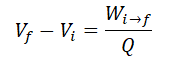
Work done to bring a charge Q from initial position of potential to final position of potential by external agent is given by the above expression.
Then note the physical meaning and SI unit of the quantities involved.
This makes last-minute revision much easier.
3. Include SI Units and Dimensions
Units are extremely important in Physics. Write the SI unit alongside important physical quantities. For examples,
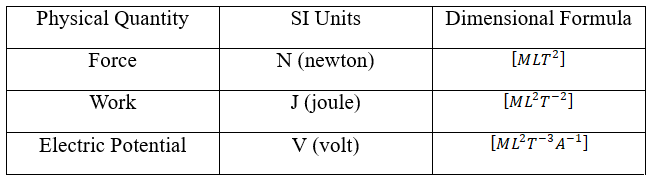
Dimensional analysis can also be useful for checking whether an equation is dimensionally consistent.
4. Use Diagrams and Graphs
A good diagram can explain a Physics concept quickly. Include labelled diagrams wherever they improve understanding.
Graphs should have clearly labelled axes and should represent the correct physical relationship.
For example, graphs are particularly useful while studying motion, current-voltage relationships, alternating current and optical concepts.
5. Separate Concepts From Extra Information
For examination preparation, it is useful to distinguish between essential syllabus concepts and additional competitive-exam material.
You may use headings such as:
Board Examination Focus
NEET/JEE Important
Additional Practice
Make Revision Time Table AND Strategies
This helps students decide what they need to revise first.
6. Add Common Mistakes
A short “Common Mistakes” section can be extremely useful.
Examples include:
- forgetting units,
- using the wrong sign convention,
- confusing similar formulas,
- ignoring vector direction,
- making calculation errors,
- using an equation outside its applicable conditions.
7. Keep Notes Short but Complete
Notes should not become another textbook. The purpose of notes is to provide a structured revision resource.
Use headings, bullet points, formula boxes, diagrams and short explanations wherever appropriate.
8. Revise and Update Your Notes
Notes should be reviewed regularly. Correct errors when you discover them and update the material when the examination syllabus changes.
A well-organised set of notes becomes increasingly valuable as examinations approach.
Conclusion
Effective Physics notes combine concepts, formulas, units, diagrams, graphs, examples and revision points in a structured format.
The goal is not to write more pages. The goal is to create notes that help you understand Physics quickly and revise it efficiently.
When your notes are clear and organised, your revision becomes more focused—and your problem-solving practice becomes more meaningful.
Internal Link
Outbound Links